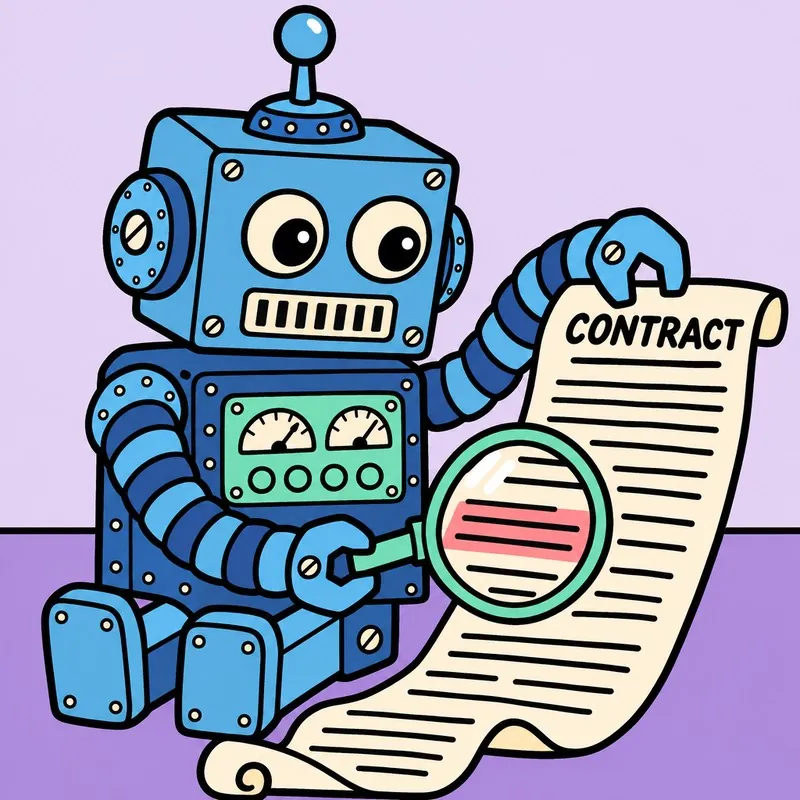
"AI startup" is a spectrum. On one end you've got teams training real models, measuring real error rates, and sweating over data drift at 2am. On the other end you've got... a spreadsheet, ChatGPT API, and a sales deck that says proprietary AI in 48pt font.
I've been on both sides of this. The second one is way more common than you'd think.
I'm not writing this as a journalist hunting for scalps. I'm writing it as someone who's been inside the building while the "AI" turned out to be a mix of column mapping, data formatting, and a support team in another time zone doing hero work with zero credit.
The Spectrum: Real ML - Wrapper - "Wait, what?"
I've started bucketing companies like this:
1) Genuine ML companies
They can tell you what model they use, why they chose it, and what it costs to run. Ask them about failure modes and they don't get defensive - they have battle stories. They have opinions about evaluation that sound like they came from actual experience, not a blog post they skimmed.
They might be using smaller, specialized models too. I worked at a physical product company where we learned this the hard way: a targeted model with the right data can beat a bigger general-purpose model. It's less sexy, but it actually works. This is the kind of practical AI future focused on specialized solutions that actually delivers value.
2) API wrapper startups (which, look, can be fine)
They're building workflow, UX, distribution, and domain knowledge on top of an existing model API. That can be a real business. It can also be fragile.
The tell is honesty. If the pitch is "we orchestrate models, add guardrails, handle integrations," fine. That's a real thing. If they claim they invented the model though? Now we're in fantasy land.
3) Outright frauds
This is where the "AI" is humans, spreadsheets, or contractors doing the thing manually while marketing pretends it's automated. Sometimes the company tells itself it's temporary. Sometimes it's been three years and there's still no model.
I worked at a SaaS company that claimed it used AI to automate mundane, error-prone financial tasks. A few weeks in, support/services didn't want to show me the system. I was told to "come to our office and watch us work" by a team in South Asia. Which, you know, is not what you say when you have an automated pipeline. It's what you say when you have people in chairs doing the work.
Then code review happened. The bulk of the "AI" was mapping columns in spreadsheets and formatting data. "It learns patterns" tells me nothing. My brain learns patterns. Excel learns patterns if you squint hard enough. Don't knock Excel, we all know it still drives about a quarter of Microsoft's revenue.
The Tells (Technical and Social)
One of these alone? Could be nothing. Three or four together? You've got a problem.
Technical tells
- Vague explanations that never resolve into nouns and numbers.
"It learns patterns" is not an explanation. - No architecture story. Even a wrapper can say "We call ChatGPT, we chunk documents this way, we rerank with this scoring heuristic." If they can't give you nouns, they don't have a system.
- No evaluation plan. If "customers like it" is the only metric, you're not doing ML. You're doing vibes.
- Demos that feel rehearsed. Always the same inputs, always the same clean output, never a weird edge case.
- "Proprietary AI" as a shield. Look, trade secrets are real. But "we can't tell you anything about how it works" isn't protecting IP. It's hiding the fact that there's nothing to protect.
Social tells
- Knowledge silos that feel intentional. One team "owns" the truth and everyone else gets shut out. Not because it's complex, but because questions are dangerous.
- Us-vs-them dynamics between engineering and services/support.
- Rotating saviors. First it's a sales guru who's going to fix everything. Then a marketing genius. Then an ex-Google person. Then another ex-Google person. The problem never changes, just the person who's supposed to solve it.
- Vanity metrics obsession. Website visitors, LinkedIn likes, "pipeline" numbers that mean nothing. But ask them who their ideal customer is and you get a different answer every time.
- Cult-of-personality leadership. If asking basic questions is treated like disloyalty, you're not doing engineering. You're doing cult theater.
I call this whole pattern death flailing. It's the frantic motion of a company that knows it's in trouble but can't admit it, so instead it just moves faster and louder.
The Awkward Middle: Humans-in-the-Loop (Sometimes Legit)
There's a middle ground here. Some companies start with humans-in-the-loop and genuinely plan to automate. That is smart. You learn the workflow. You collect data. You find all the weird edge cases before you try to code around them.
The line gets crossed when:
- they sell it as fully automated while humans do most of the work, or
- they never invest in automation because hiring contractors is cheaper than building the actual system, and that's been true for eight quarters in a row.
I've watched internal teams and external contractors compete to see who can do the work cheaper while the marketing site still says "AI-powered." That's not a strategy. That's called "lying" with too many extra steps.
Questions to Ask (Whether You're Interviewing or Writing a Check)
The answers don't need to be perfect. They just need to be real.
Product reality
- What part is automated right now, today?
- What part is humans doing it manually?
- What's stopping you from automating more? Not "what's the roadmap" - what's actually in the way?
Model reality
- What model are you using? Be specific.
- How do you know if it's working? What metric changed last month, and why?
- What does a bad output look like, and how do you catch it before it gets to a customer?
Data reality
- Where does your training data come from? Like, actually where?
- Who labels it? How do you audit label quality?
- What happens when the input format changes? Not if. When.
Org reality
- Can an engineer explain the system end-to-end without getting defensive or vague?
- Do support and engineering trust each other?
- Is transparency a real thing there, or just a word on a slide?
If you're interviewing and they can't answer these questions, you're not being difficult. You're trying to avoid joining a company where the "AI" is a Google Sheet and a dream. For more on evaluating whether an AI startup is real or just AI washing, these questions are your first line of defense.
-Sethers