San Antonio, Texas · Bexar
Architecture · Strategy · Daily code
When your team doesn't have a technical partner.
You're on your third freelancer this year. The first one disappeared mid-sprint. The second one built something that technically works but nobody can maintain. Now you're onboarding someone new again, explaining the same business logic for the third time, watching them nod along while you wonder if they actually get it.
You're in a meeting and someone asks "can we add this feature by Q2?" and you have no idea. You can't evaluate timelines, you can't assess tradeoffs, and the person you're paying to know these things gives you a different answer every time.
Your app goes down on a Saturday night. You text your developer. No response for 6 hours. When they finally reply, they need another 4 hours to figure out what broke because they don't remember how the system fits together. You're sitting at dinner calculating revenue lost per minute.
The real problem isn't that you need a developer. And it's not that you need a CTO. It's that the role you actually need doesn't fit standard job descriptions — you need someone who thinks at the executive level but executes at the individual contributor level, every single day.
Half the "fractional CTOs" out there are advisors in a fancy hat — Notion docs, Slack opinions, zero pull requests. That isn't the job.
Not a strategy doc, not a Notion page — production code, in your repo, tested and deployed. The lead engineer you hire should be able to unblock the team by shipping, not just advising on Slack.
Database choice, auth pattern, deployment pipeline, monitoring, cost structure. Founders without a technical partner end up with whatever their first contractor felt like using — and pay for it later.
Reviews contractor output, interviews engineering hires, calls the BS when a vendor is overcharging, and makes sure everyone on your team is set up to succeed.
When a VC asks "who's your technical lead?" on a fundraising call, you need a name, a LinkedIn, and a track record — not a contractor nobody knows. An embedded lead engineer closes that gap without the full-time equity grant.
The "embedded" part means I work across 3 clients at a time — so San Antonio founders get senior engineering judgment at a fraction of the cost of a full-time hire. The "still writes the code" part is what separates this from advisory roles.
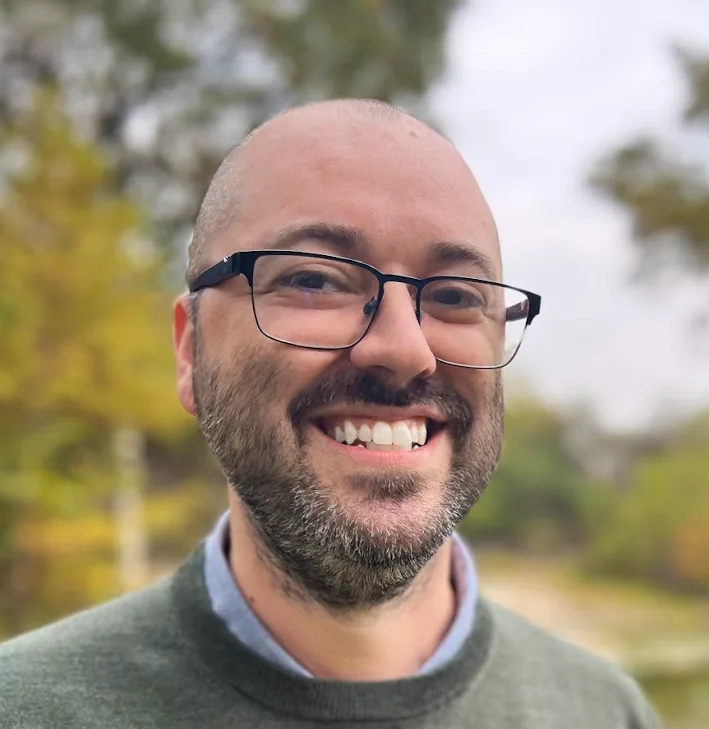
About Seth
I started writing code at 15. Since then I've been engineer #1, CTO, lead architect, and the technical backbone of startup after startup — watching brilliant ideas die from bad engineering and great engineering die from bad business. I've seen every way it goes wrong.
I've hand-rolled neural networks in C when there were no good Python libraries, shoved terabytes of data through Postgres every hour without melting the cluster, designed custom BLE protocols for wearable hardware, built CAD-integrated configurators that drove real CNC machines, shipped computer vision systems that ran on off-the-shelf cameras, and stood up billing/auth/ops infrastructure more times than I can count.
Now I embed in small teams as the lead engineer. I own the architecture, the strategy, and the code itself. Not as a consultant who advises and leaves — as a partner who shows up every day and builds.
No discovery calls that turn into sales pitches. No 30-slide decks. Here's what happens when a San Antonio founder reaches out:
I join your team. Read every line of code. Understand the business, the product, the people.
Identify what's working, what needs attention, what's urgent. Give you a straight answer about where things stand.
Take full ownership of the technical stack. Architecture, infrastructure, daily development. It's mine now.
Ship features. Solve problems. Make executive calls AND write production code — every single day.
Grow the technical foundation as your business grows. The code is yours from day one — no lock-in, ever.
One engineer. Your entire technical stack. Architecture, strategy, and daily code — available to San Antonio founders and teams.
Architecture, strategy, and daily code — one person, fully embedded
I join your team as the lead engineer. I own the technical vision, make the architectural calls, and write production code every single day. No management layers, no handoffs, no disappearing acts.
Twenty startups. Every flavor of failure and quiet success. Here are a few lessons I bring to every San Antonio engagement:
Worked at a crowdfunding startup where the one rock-star engineer used the attention to land a FAANG job — and left a gaping hole nobody could fill. The lesson: document relentlessly, and never let one person become a single point of failure.
Had a sales rep "crush" their goals by selling features the company didn't actually have. Customers churned right after commission got paid. The lesson: retention and engagement metrics tell the truth; booking numbers often don't.
Shipped a "small" change on a Friday afternoon that took down an e-commerce site for launch weekend, because I tested in Firefox and forgot about IE. The lesson: test like a user, not like a developer.
Hired a developer who aced every technical quiz, then turned out not to know how to code — they'd been hoping to figure it out before anyone noticed. The lesson: conversational interviews about real past decisions beat whiteboard gotchas every time.
These aren't hypotheticals. Each one cost a real company real money — so your San Antonio startup doesn't have to re-learn them.
San Antonio, Texas · Bexar · Major Metro
San Antonio is Texas's cybersecurity and defense capital. NSA Texas Cryptologic Center, the 24th Air Force (cyber), Joint Base San Antonio, and a private-sector cybersecurity cluster that feeds off all of them. USAA is here. H-E-B headquarters is here. The startup scene is smaller than Austin or Dallas — but the founders here tend to be unusually technically credible, often coming straight out of military, intelligence, or USAA backgrounds.
The San Antonio founders I work with usually have unusually deep domain expertise — fifteen years inside USAA, a decade running cyber operations at Joint Base, a research career at UT Health San Antonio. The constraint isn't 'do you understand the problem?' — they obviously do. The constraint is whether they've ever shipped commercial software, or whether their entire career has been inside a regulated environment with a procurement officer between them and the customer. That's a different muscle, and it's the one I usually help build.
San Antonio is a three-hour drive from Houston, but it's not part of my regular weekly rotation the way Austin and Dallas are. On-site happens for kickoffs, important client meetings, and quarterly reviews — usually planned at least a week out, not same-day. Day-to-day work is remote. The cybersecurity-adjacent founders I work with in San Antonio tend to be remote-comfortable anyway, which makes the rhythm work.
<built-in method copy of dict object at 0x7f649966c480>
The companies I take on in San Antonio tend to cluster around cybersecurity, defense, biotech, financial services — though I've delivered engagements across nearly every flavor of Texas startup. What they have in common: a founder who needs someone they can trust to make technical calls without having to double-check every decision.
Remote-first engagements work across all of Texas. Some of the other Bexar cities I work with:
Where the actual work in San Antonio happens — and where founders most often need a senior technical partner who already speaks the domain.
Dominant flavor. Private-sector cyber startups, defensive tools, threat intelligence, MSP-adjacent products. Many founders here have NSA or military-cyber backgrounds — the technical foundation is usually solid; what they often lack is commercial-product instincts and a go-to-market that doesn't assume a procurement officer on the other end.
JBSA is one of the largest defense employers in the country. Dual-use tech startups, mil-spec hardware, training simulation, military logistics — all real markets, with the unusual challenge that 'product' often means 'gov-procurement-shaped product,' which is a very different thing from a commercial SaaS.
USAA is a uniquely large employer here, and a steady stream of fintech and insurtech founders comes out of it. The advantage: deep regulatory familiarity. The challenge: USAA's internal architecture standards aren't commercial-market standards, and a lot of founders carry that bias into companies that don't actually need it.
UT Health Science Center plus the Brooks City Base research cluster. Biotech founders here are usually trying to commercialize academic research — the science is real but the data engineering is rarely well-considered, and the gap between a working research pipeline and a commercial product is wider than most founders realize.
From the field
The San Antonio engagement that comes up most: a founder with deep domain expertise — twenty years at USAA, a decade at the 24th Air Force, a long career inside one of the cyber-cluster companies — leaves to commercialize something they spent their career building inside a regulated environment. The technical foundation of v1 is often surprisingly good, because the founder personally wrote it. What's missing is everything around it: the commercial-product muscle. Pricing, billing, multi-tenant architecture, customer onboarding that doesn't require a four-hour kickoff call, support tooling, anything that assumes a customer who is not a procurement officer. Those are gaps I can close fast, because they're not novel — they're the same boring infrastructure problems that show up in every commercial SaaS, and the founder has been heads-down on the actual product instead.
Yes — with caveats. I don't hold an active clearance, so engagements that require classified work aren't a fit. For unclassified commercial cybersecurity work — building the product, the platform, the SaaS layer around the secure-environment work the founder did inside their previous role — that's a comfortable fit and a recurring pattern in my San Antonio engagements.
USAA's internal architecture and standards are some of the more advanced in the industry, and a lot of San Antonio fintech and insurtech founders carry that bias. I can tell you which of those standards translate to a commercial-market startup and which are over-engineering for a Series A. The answer is usually 'less than you think.'
Yes, but with less frequency than Houston, Dallas, or Austin. The Houston-to-SA drive is three hours each way, so on-site days are usually planned a week or two out, not same-day. For most San Antonio clients, two or three on-site days per quarter is what works — concentrated around kickoffs, quarterly reviews, and important client meetings.
With freelancers you're already dependent on someone with zero commitment to your business. I embed specifically to stay. The 3-month minimum exists so we both take the partnership seriously. And everything I build is yours from day one — code, documentation, all of it.
I've done exactly this for 20+ startups over 27 years. I know what one senior engineer can handle — and I know when to say "we need help here." One person who owns everything actually moves faster than a team of specialists coordinating through Jira tickets.
I'm primarily remote-first, which means I can usually start faster. For San Antonio and other Texas clients, on-site visits are possible when they genuinely move the needle — not for meetings that could've been a Slack message.
The 3-month minimum exists so we both take the engagement seriously and have real time to ship. After that, we can wrap at the end of any month up to the 6-month maximum. You keep all the code and documentation.
$15,000/month. 3-month minimum, 6-month maximum. No hourly billing, no tiered packages, no upsells. I only take on 3 clients at a time — if you want a seat, let's talk and we'll see if the fit is right.
Absolutely, yes. Your legacy code is haunted by the disembodied spirits of junior developers who copy-pasted from Stack Overflow without understanding what they were doing. Let's clear them out.
One meeting. No pitch deck, no proposals. Just a conversation about what you need and whether I'm the right fit.
Roster limited to 3 clients
Pick a time that works. No sales pitch — just a straight conversation about your team and your stack.
Book a CallNo commitment. 20 minutes. Straight answers.
tl;dr
I embed in your team as the lead engineer. I own the architecture, the strategy, and the code. One person who thinks like a CTO and ships like a senior engineer — serving San Antonio and all of Texas.
Let's Talk About Your TeamNo commitment. 20 minutes. Straight answers.