I've worked at dozens of startups. More than I'd like to admit were basically theater productions. Great costumes. Strong monologues. A suspicious lack of working software backstage.
This is one of those posts where I'm not trying to be inspirational. I'm trying to be useful. Because if you've ever taken a job based on a pitch deck and vibes, you already know the feeling. It's almost like going through the five stages of grief but for your own career.
The Emperor's New AI (Featuring: Excel)
I joined a company that claimed to use AI to automate boring, error-prone real-estate financial tasks. The website was loud about it. "Revolutionary! AI-powered! Death to Spreadsheets!" Big hero text. Big claims.
I was far enough into my career to have a good idea of what I'd find: I expected a cobbled-together training pipeline, custom models in Jupyter Notebooks, human-in-the-loop validation. Something that resembles startup machine learning - ugly, but functional.
Instead, I ran into a big 'ol streamer of red flags: teams that wouldn't show me how the "AI" worked. Support and services were weirdly defensive. I got stonewalled, redirected, and eventually invited to "come to our office and watch us work" by a team in South Asia. Which is a wild thing to say to the guy you hired to improve the system.
When I finally got visibility, here's what I found:
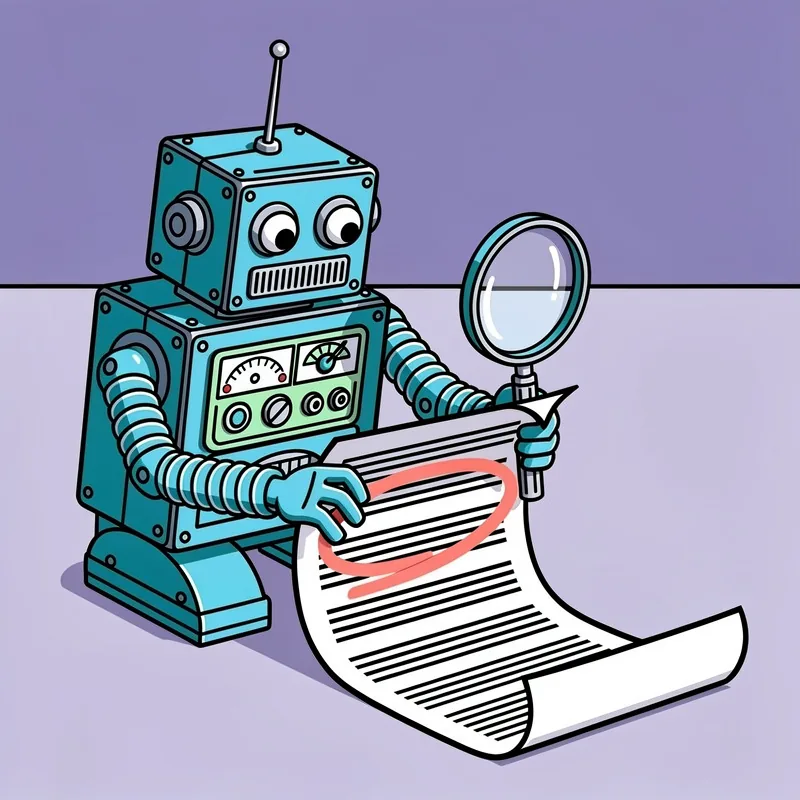
The "AI" was mostly column mapping, data formatting, regular expressions. Rules that could've lived in a config file. And then the hard parts were handled by humans. Not a few humans. An army of humans. Quietly doing the work while product pretended it was magic.
Awkward truth (awkwatruth?): if humans are cheaper than machines, humans will get the job. There's an ethical rabbit-hole I love going down right here; but we'll save it for another post.
And yes, I've been naive here too. Early in my career I assumed "AI company" meant "AI everywhere." Now I assume it means "some Python exists somewhere" until proven otherwise. Ask to see the workflow. Ask where the models are. Ask what happens when the models are wrong. If the answers are vague, you're not looking at a moat. You're looking at a curtain.
The Corporate Vampire (Charisma Included)
I had a CEO with a pretty obvious addictive personality. His addictions were only rivaled by his charisma.
He was the type of guy who liked to do meetings at strip clubs. He always had young ladies around that felt like they appreciated financial compensation for their company. And he had a neat little business pattern: purchase profitable companies using investor money, drain them, then spin them down while blaming "bad market opportunity."
It was a clean loop. It was also horrifying to watch up close, because in meetings it still sounded like leadership. People want a story so badly that they'll accept almost any plot, as long as the main character is confident, charismatic, snazzy.
My takeaway wasn't philosophical. It was practical: I learned how to research buyers before selling out. If you're small and someone bigger wants to "partner" or "acquire," don't just look at the term sheet. Look at their history. Talk to people from the last company they bought. If you can't find anyone willing to speak, take the hint.
The Pre-IPO Paradise Lost (In Four Easy Steps)
I once took what looked like the perfect job on the ramp-up to an IPO. During the hiring process I was promised a specific job description, title, salary, and location. It was too good to be true. ...yeah, it was too good to be true.
My first week I was "temporarily" assigned to a different city about an hour away. Then my first paycheck landed about 20% lower than what I was offered. Then I was given a desk on the support floor. Then I was taking angry customer calls.
When I raised it to my boss, nothing meaningful happened. After a particularly stressful incident, I emailed my resignation. Within minutes I was escorted to HR and handed paperwork to sign. I was told it was "standard."
I'm no lawyer, but I do read Reddit a lot (thx r/AskALawyer). There's no such thing as "standard parting paperwork." That packet included gems like paying back relocation package that never came to fruition and a broad non-compete that basically implied I couldn't work in technology for the next few years. I just got up and walked out.
That experience changed how I operate. Now I get everything in writing. I verify the comp on day one. I ask where my desk is going to be. I read every line. And if someone gets offended by basic clarity, that's a good sign I should leave before the plot twist.
What I Actually Do Now (Because I Like Eating)
I don't tell these stories because I think I'm smarter than everyone. I tell them because I've been fooled, rushed, pressured, and "just trust us"-ed a shameful number of times.
So now I do a few boring things on purpose:
- I ask to see the real system, not the diagram.
- I ask who does what when the automation fails.
- I watch churn and refunds like a hawk, because sales can absolutely "win" while the company dies.
- I keep a healthy suspicion of secrecy that's framed as "proprietary."
- I treat job offers like contracts, not compliments.
If someone won't show you how their AI works, it might just be Excel wearing a fancy hat. And if it is, fine. Excel runs the world. Just don't sell it as sentient. And don't make your customers pay AI prices for a spreadsheet plus interns.
-Sethers