We're watching founders build a second company by accident.
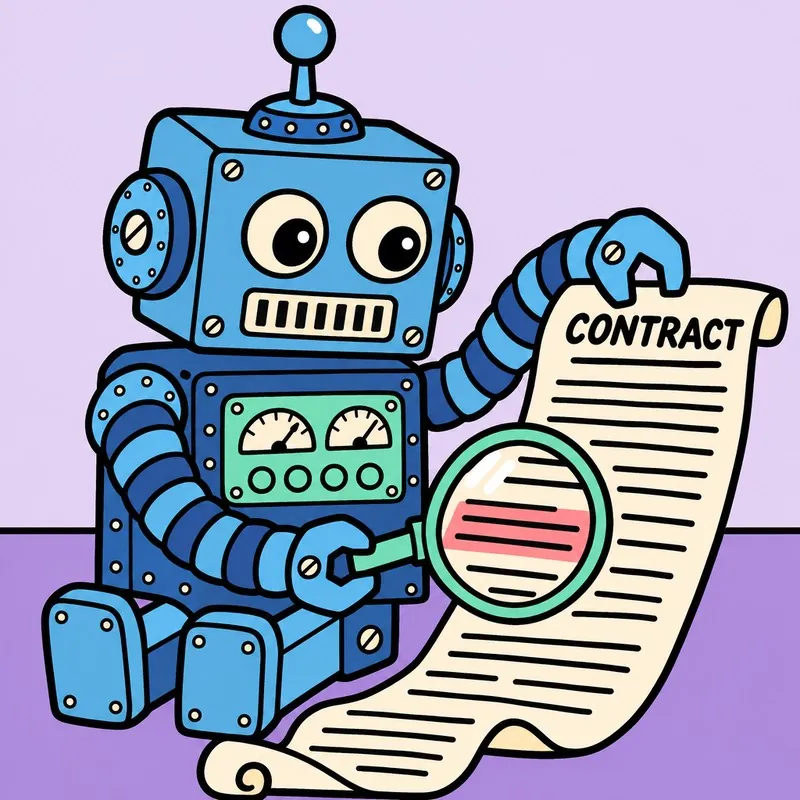
A sprawling nest of AI tools, docs, dashboards, agents, prompts, automations, and "quick workflows" somehow becomes the main thing. The actual product ends up living in the cracks between Notion, Slack, a half-working CRM, and a Google Sheet that everyone is afraid to touch.
The robots don't "win" by taking your job. They win by handing you more admin until the toolchain becomes the job.
The founder OS is a cadence, not a toolchain
A startup needs an operating system. The repeatable kind.
I like Lean Startup because it's basically permission to stop guessing and start learning. But the part people skip is the cadence. Build-Measure-Learn isn't a vibe. It's a loop you run on schedule, even when you're tired, even when you're excited, even when you've convinced yourself the new plan is "obvious."
Cadence is what keeps you learning without turning the whole business into spaghetti.
The operating system does not need to be complicated. In fact, complicated is usually where it starts rotting. The whole thing should answer five questions:
- What are we trying to learn?
- What did we ship or change?
- What happened in the real world?
- What are we doing next?
- What would make us change our mind?
That's it. The rest is furniture.
A simple operating cadence that doesn't rot
Here's what I use. It's simple, which is why it works.
The first thing I put in place at any new job or project, long before I built anything called an "operating system," was a habit of asking one blunt question: what's our runway? Not because I loved spreadsheets. Because the answer, and how someone reacts to being asked, tells you almost everything about the state of the company. If the number comes back fast and specific, good sign. If it comes back rehearsed, deflected, or wrapped in a story about an upcoming round that's "basically closed," that's a tell. Trust but verify. That's what a test case is, in code or in a business - I know you said it works, but does it still work, will it keep working next week? The weekly and monthly reviews below are just that same instinct, formalized so it doesn't depend on me remembering to be suspicious.
Weekly: learning review (30-60 minutes)
This is the main loop. Do it every week. Same time, same format, same annoying questions. Especially when things are going well, because that's when founders start getting poetic.
Agenda:
- What did we ship?
- What did we measure?
- What did customers do, not say?
- What did we learn that changed our mind?
- What are we changing this week because of it?
Write it down. If it's not written down, it becomes folklore. Folklore is how teams end up re-litigating the same decision every three weeks.
The output should be one short memo. Not a novel. Definitely not a slide deck. A memo.
This week we believed:
We changed:
We measured:
The result was:
We learned:
Next week we will:
AI can draft the memo from tickets, commits, customer notes, and metrics. Great. Let it do that. Then a human reads it and removes the hallucinated confidence.
Traditional software owns the receipts: Git, analytics, CRM, support tickets, Stripe, monitoring, whatever is real in your business. The model can summarize. It does not get to invent the scoreboard.
Weekly: metrics review (30 minutes)
Separate this from the learning review. Mixing metrics and strategy tends to produce a meeting where everyone talks about the chart they like best. Very democratic. Useless, but democratic.
Pick a small set of numbers:
- revenue
- profit
- activation
- retention
- paid conversion
- support load
- sales cycle length
- one custom metric that maps to the current bet
The custom metric matters. If you're testing onboarding, maybe it's "second meaningful action." If you're testing a sales motion, maybe it's "qualified calls booked from target segment." If you're testing pricing, maybe it's "accepted proposal rate."
Do not track 40 metrics and call it discipline. That's hoarding.
For each metric, write:
Metric:
Source of truth:
Expected movement:
Actual movement:
Likely cause:
Action:
AI can help explain changes, find anomalies, and draft questions. SQL, product analytics, Stripe, and server logs still own the numbers. If a model tells you retention "seems improved" from a screenshot, close the tab and go outside.
I've watched founders fall in love with metrics that don't mean anything, and it's rarely an accident. Hyper-focus on vanity metrics - website visitors, social media likes, whatever number goes up and to the right without connecting to revenue - is one of the clearest warning signs I've learned to watch for in a company. A metrics review that quietly turns into a highlight reel of good-looking charts is the same disease with a nicer outfit on.
Monthly: pivot-or-persevere review (60-90 minutes)
This is the grown-up version of "Are we still doing the thing?"
Look at:
- retention (or whatever your proxy is)
- sales cycle length
- support load
- one scary metric you don't like
- customer evidence
- runway
- opportunity cost
If you can't name the scary metric, you're not looking.
This meeting should produce one of three decisions:
- Persevere: the core bet is still alive, and the next experiments are obvious enough.
- Tune: the bet is alive, but the execution is wrong.
- Pivot: the evidence says the bet changed, not just the homepage.
The dangerous fourth option is "keep going while changing the words." That's a makeup change, not a pivot.
Bring an evidence packet:
- cohort table
- customer quotes
- lost-deal reasons
- churn reasons
- support themes
- cash position
- current roadmap
- what changed since last month
AI can assemble the packet. It can summarize calls, group objections, draft scenarios, and list risks. Useful. But the decision record should be written by a person who can be held responsible for it.
Customer call rhythm (ongoing)
You need real calls. Not surveys. Not "feedback" from a power user who wants you to build their personal workflow engine.
Buyer research is mostly shutting up, listening, and noticing patterns. What are they already paying for? What do they complain about without being prompted? What do they currently do with spreadsheets that makes them hate their life?
Yes, I'm bringing up spreadsheets. Spreadsheets are where a lot of "AI strategy" goes to become regular operations hidden in a trench coat.
I bring this up so often because I've been told, more times than I can count, "we wouldn't be able to do this without you" - by a manager, a founder, a whole team - right before getting let go and watching everyone else move on without me. Every single time, the business kept running fine. What that taught me is there's exactly one person who is actually necessary to any company, and it isn't the employee who feels indispensable in the room. It's the customer. Without a customer you don't have a company, you have a weird and expensive hobby. Customer call rhythm exists because that's the one relationship in the whole business that can't be replaced by a teammate feeling important.
Set a minimum. Five customer or buyer conversations a month is better than zero. Ten is awesome. The exact number matters less than the fact that the cadence exists and does not depend on everyone suddenly feeling brave.
Track the calls like this:
Person:
Segment:
Role:
Current workaround:
Pain language:
Trigger event:
Budget owner:
Existing tool:
Exact quote:
Follow-up:
AI can summarize transcripts and pull quotes. You still need to listen to enough raw audio to hear the hesitation. Transcripts flatten social reality. A customer saying "interesting" can mean "I want this," "I don't understand this," or "please let me leave this Zoom call."
Monthly: toolchain cleanup (30 minutes)
This sounds like janitorial work because it is.
Every month, ask:
- What tool did we add?
- What tool did we stop using?
- What dashboard is stale?
- What prompt is now wrong?
- What automation silently broke?
- What spreadsheet became infrastructure?
- What access should be removed?
AI stacks rot fast. Prompts reference old positioning. Agents keep producing reports nobody reads. Dashboards survive long after the metric stopped mattering. Someone creates a Zapier workflow, leaves, and now the company runs on a ghost.
Do the cleanup. Future you is already tired.
Where AI helps (and where it quietly hurts)
AI works as operating memory. It also generates plausible junk that looks like progress... until you try to use it.
Use AI for:
- Experiment logs: "We tried X, changed Y, saw Z."
- Customer call summaries: bullets, objections, exact phrases.
- Decision records: what we decided, why, and what would change our mind.
- Evidence packets: pull the receipts before the meeting, not during.
I use this template for every decision that matters:
Decision:
Date:
Context:
Options considered:
Chosen option + why:
Risks:
What would change our mind:
Links (calls, metrics, docs):
Traditional software still runs the cadence:
- calendar for the loop
- tickets for real work
- CRM for actual sales motion
- dashboards for numbers you can point at in a meeting
- docs for decisions that need to survive the week
- access controls for tools that should not become a free-for-all
- backups because optimism is not a recovery plan
AI should support the system not become the system.
The founder-brain failure mode
One more thing: cadence protects you from founder brain.
When you run the cadence, people argue with evidence instead of vibes. Someone can say "Cool story. Show me the retention curve" without sounding like a complete jerk. This is why the operating system needs artifacts. Not because artifacts are fun. They are not. Artifacts are how you keep the loudest person in the room from driving the roadmap.
Good artifacts:
- experiment logs
- customer quote banks
- cohort tables
- decision records
- roadmap diffs
- support theme summaries
- monthly pivot memos
Bad artifacts:
- slide decks
- dashboards nobody trusts
- strategy docs with no owner
- AI summaries with no links to source material
- roadmaps that are really wish lists wearing product language
The rule is simple: if the artifact cannot change a decision, delete it or demote it.
If you want help building this
If you want help building stable systems that don't rely on motivation, let's talk. You don't need 40 agents. You need a repeatable week.
-Sethers